In the quiet corners of healthcare facilities and home care settings, a seemingly mundane detail holds profound significance for those confined to prolonged bed rest. The wrinkles and folds in bed linens, often overlooked by the casual observer, represent more than just an aesthetic concern; they are a matter of comfort, dignity, and, most critically, health. For individuals who spend the majority of their days and nights in bed, the smoothness of their sheets can be the difference between a restful sleep and a night of discomfort, between healthy skin and the development of painful, dangerous pressure injuries.
The human body is not designed for extended immobility. When a person remains in one position for too long, the constant pressure on certain points of the body—heels, hips, tailbone, shoulders, and the back of the head—impedes blood flow to the skin and underlying tissues. This ischemia, or lack of blood flow, can lead to tissue damage, resulting in what are clinically known as pressure ulcers, bedsores, or decubitus ulcers. These are not mere surface-level irritations; they are wounds that can extend deep into the muscle and bone, are notoriously difficult to heal, and can lead to severe infections like sepsis, which can be life-threatening. It is within this context that the simple act of smoothing out a bedsheet transforms from a chore into a vital component of compassionate and competent care.
A wrinkled sheet acts as a concentrated pressure point, much like a pebble under a sleeping bag. For a mobile person, this is a minor annoyance quickly remedied by a shift in position. For someone who cannot move independently, that wrinkle becomes a persistent, localized source of pressure, dramatically accelerating the risk of skin breakdown. Every fold and crease creates a ridge that cuts into the skin, compromising its integrity. Furthermore, wrinkles can trap moisture from perspiration or accidental incontinence against the skin. This moisture softens the skin (maceration), making it even more vulnerable to friction and shear forces, which occur when the patient is moved or slides down in bed. The combination of pressure, moisture, and friction is the perfect storm for the rapid development of pressure injuries.
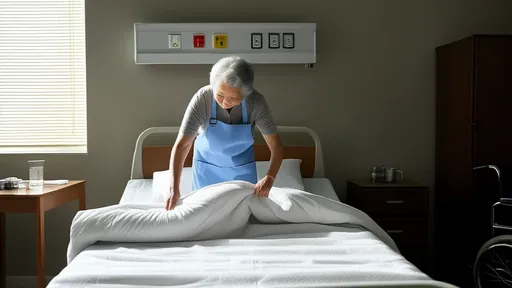
The process of smoothing bed linens, therefore, is a ritual of prevention. It is a task that demands attentiveness and a gentle touch. The caregiver must start by ensuring the bottom sheet is pulled taut and secured properly at the corners, whether using hospital-style fitted sheets or the traditional flat sheet method with mitred corners. This initial step creates a stable, wrinkle-free foundation. After the patient is positioned comfortably atop this base layer, the top sheets and blankets are applied. Each layer must be smoothed meticulously from the center outward, eliminating any potential ridges before they can form. This is not a one-time event but a continuous process, repeated after every repositioning, after bed baths, and after any activity that might disturb the linen's surface.
Technology and innovation have entered this domain, offering tools to aid in this crucial endeavor. Low-friction turning sheets and slide sheets not only assist caregivers in moving patients safely, reducing strain on their own bodies, but also help maintain the smoothness of the underlying bed linens during transfers. Specialized support surfaces, such as advanced alternating pressure air mattresses and low-air-loss beds, are designed to dynamically redistribute pressure. However, even on the most advanced mattress, wrinkled sheets can negate their therapeutic benefits. The mattress may be designed to relieve pressure, but a hard ridge of fabric will still press into the skin. Thus, the low-tech, human-powered act of smoothing remains irreplaceable.
Beyond the stark medical necessity, there is a profound element of humanity in this act. The process of carefully making a bed around a vulnerable person is an intimate one. It is a non-verbal communication of care and respect. The gentle tug of the sheet, the careful tuck of a blanket, the final pat to ensure a smooth surface—these actions say, "Your comfort matters. Your well-being is my priority." For a person who has lost a significant degree of autonomy and privacy, this respectful attention to their immediate environment can be a powerful booster of morale and psychological well-being. It reinforces their dignity at a time when they may feel it is most compromised.
For family members acting as caregivers at home, mastering this skill is empowering. It is a tangible, effective way they can contribute directly to the health and comfort of their loved one. Nurses and professional aides are trained to see the bed as not just a piece of furniture, but as a central part of their patient's ecosystem. Their expert eyes scan for the slightest crease, their hands automatically smoothing as they go about their duties. This vigilance is a hallmark of quality care. It represents an understanding that in long-term bed rest, there are no small details. Every element of the patient's environment is interconnected with their health outcome.
In conclusion, the persistent smoothing of bed linens for long-term bedridden individuals is a critical, yet understated, pillar of preventive healthcare. It is a direct defense against the painful and costly complication of pressure injuries. It is a practice rooted in the basic physics of pressure redistribution and the biology of human skin. While supported by modern medical equipment, its execution remains fundamentally a human task, reliant on consistency, diligence, and a compassionate touch. To smooth a sheet is to actively participate in preserving a person's physical integrity and affirming their inherent dignity. It is a quiet, daily testament to the idea that in caregiving, the smallest actions often hold the greatest significance.
By /Aug 26, 2025
By /Aug 26, 2025
By /Aug 26, 2025
By /Aug 26, 2025
By /Aug 26, 2025
By /Aug 26, 2025
By /Aug 26, 2025

By /Aug 26, 2025

By /Aug 26, 2025
By /Aug 26, 2025
By /Aug 26, 2025

By /Aug 26, 2025

By /Aug 26, 2025

By /Aug 26, 2025

By /Aug 26, 2025

By /Aug 26, 2025

By /Aug 26, 2025

By /Aug 26, 2025
By /Aug 26, 2025
By /Aug 26, 2025
