In the vast and varied world of pasta, shape is far more than mere aesthetics; it is a language unto itself, a culinary dialect spoken from the sun-drenched hills of Sicily to the bustling trattorias of Rome. Each form, from the humble tube to the intricate spiral, tells a story of regional identity, historical necessity, and, most importantly, a deep-seated understanding of how texture and sauce interact to create harmony on the plate. This is not a matter of random pairing but a centuries-old dialogue between ingredient and design, a fundamental principle of Italian gastronomy that transforms simple wheat and water into an art form.
The genesis of pasta shapes is often rooted in practicality and geography. In the rugged, arid landscapes of Southern Italy, where durum wheat thrived, dried pasta forms like orecchiette, meaning "little ears," emerged in Puglia. Their concave shape and rough texture were perfectly designed by hand to cradle coarse, rustic sauces, often based with broccoli rabe or a simple tomato and anchovy base. The shape's sturdiness holds up to vigorous tossing, ensuring every nook is coated. Conversely, the delicate, egg-rich fresh pasta of the Northern regions, like Emilia-Romagna, gave birth to wide, flat sheets destined for layering in lasagna or cutting into tagliatelle. These ribbons are smooth and soft, designed to be draped in equally rich, velvety sauces such as a slow-simmered ragù alla Bolognese, where the sauce clings to the surface rather than being captured within.
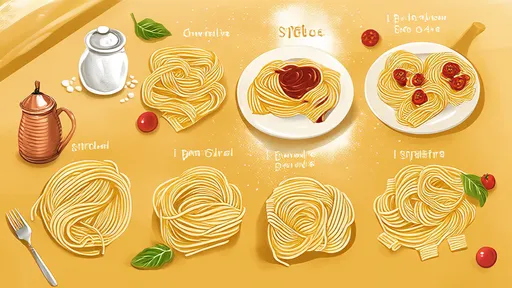
Consider the ubiquitous spaghetti, perhaps the most internationally recognized shape. Its long, thin, cylindrical form is a masterclass in simplicity and function. It is the ideal vehicle for oil-based, emulsified, or thin, delicate sauces. A classic aglio e olio (garlic and oil) or alle vongole (with clams) lightly coats each strand, allowing the clean flavour of the pasta itself to shine through. The act of twirling it on a fork seamlessly integrates the perfect pasta-to-sauce ratio with every bite. To pair it with a heavy, chunky meat sauce would be a culinary misstep; the sauce would slide off, leaving bare pasta below and a pool of topping on the plate—a clear failure in pasta linguistics.
Tube-shaped pastas like rigatoni and penne speak a different, more robust language. Their hollow centres and ridged exteriors (in the case of penne rigate) are engineered for capture and adhesion. They are the workhorses of the pasta world, built to stand up to the heft and complexity of baked dishes (pasta al forno) or thick, chunky vegetable sauces (alla Norma) and rich meat ragùs. The sauce floods the interior tube and clings to the exterior ridges, guaranteeing a flavour-packed experience from end to end. Ziti, another tube, is almost exclusively reserved for baking, its large bore capable of holding vast quantities of cheese and sauce within its structure.
Then there are the shapes designed for trapping tiny pieces of sauce and protein, the hidden gems in every forkful. Fusilli and cavatappi, with their tight spirals and corkscrew designs, are akin to culinary locksmiths. Their complex geometry is perfect for pesto, where the ground basil and pine nuts nestle deep within the curls, or for pasta salads, where they secure diced vegetables, olives, and cubes of cheese. A smooth pasta would fail here, letting the smaller components simply fall away. Similarly, the tiny soup pastas like acini di pepe ("peppercorns") or pastina are designed to be consumed with the broth, adding body and substance to every spoonful without overpowering the liquid itself.
Stuffed pastas like tortellini, ravioli, and cannelloni represent a more advanced dialect. Here, the pasta itself acts as a delicate casing, a veil for a precious filling of cheese, meat, or vegetables. The sauce chosen for these dishes plays a supporting role, designed to complement rather than overwhelm the interior. A simple butter and sage sauce (burro e salvia) for pumpkin ravioli, a light tomato sauce for cheese-filled tortellini, or a creamy béchamel blanketing cannelloni. The sauce is a grace note that enhances the main event contained within the pasta pouch.
Ultimately, the stories behind pasta shapes are a testament to Italian ingenuity and respect for ingredients. It is a language developed over generations, where form is inextricably linked to function. To understand this is to move beyond simply boiling noodles and heating sauce; it is to become fluent in the poetry of Italian cooking. The next time you stand before the supermarket's pasta aisle, see it not as a wall of options but as a library of culinary history. Choose your shape with intention, listen to the story it tells, and you will be well on your way to speaking the language of pasta like a true native.

By /Aug 29, 2025

By /Aug 29, 2025
By /Aug 29, 2025
By /Aug 29, 2025

By /Aug 29, 2025

By /Aug 29, 2025
By /Aug 29, 2025
By /Aug 29, 2025
By /Aug 29, 2025

By /Aug 29, 2025
By /Aug 29, 2025
By /Aug 29, 2025
By /Aug 29, 2025
By /Aug 29, 2025
By /Aug 29, 2025
By /Aug 29, 2025

By /Aug 29, 2025
By /Aug 29, 2025
By /Aug 29, 2025
By /Aug 29, 2025
